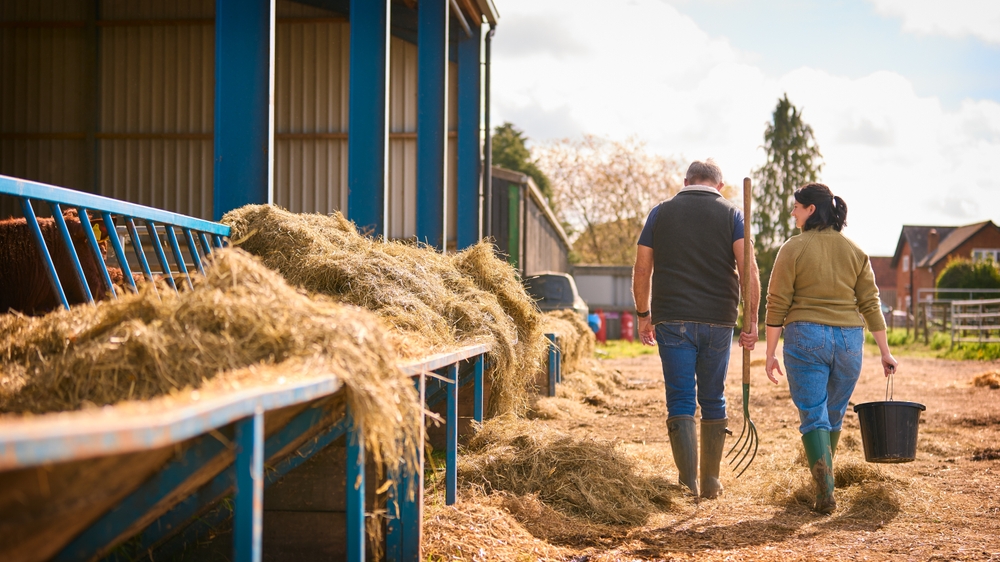
Farming divorce solicitors: Divorce and the family farm.
Divorce involving a family farm can be particularly complex. Our farming divorce solicitors advise farming families on financial settlements involving agricultural land, inherited farms, farming partnerships, trusts and other rural assets.
Why divorce in a farming family can be more complex than in other families
For a farming family, the family home may also be the workplace, principal source of income and an asset that has been in the family for generations. Parents, siblings and other family members may also have an ownership or financial interest in the farm.
If a marriage breaks down, this can make dividing the assets on divorce considerably more difficult.
The Family Court applies the financial remedy principles contained in section 25 of the Matrimonial Causes Act 1973. However, farms frequently contain substantial assets while generating relatively limited available cash. This can make achieving a fair financial settlement without damaging the farming business particularly challenging.
What happens to a farm in a divorce?
There is no single rule governing what happens to a farm on divorce.
The court will consider the individual circumstances of the marriage and the financial resources available to both spouses. Questions can arise about:
- who owns the farm and agricultural land;
- whether some or all of the farm was inherited;
- whether the farm is a matrimonial or non-matrimonial asset;
- farming partnerships and limited companies;
- trusts and tenancies;
- the interests of parents, siblings and other family members;
- the value of land, buildings, livestock and machinery;
- tax liabilities;
- each spouse’s contribution to the farm and marriage; and
- whether a settlement can be achieved without selling or breaking up the farm.
These issues mean that a farming divorce can require specialist legal, valuation, accountancy and tax advice.
An example of the type of issues that can arise in a farming divorce
Consider a farm inherited by one spouse before the marriage.
During a 20-year marriage, the couple live in the farmhouse, and the farming spouse operates the business in partnership with their parents. The other spouse helps with the accounts and administration while also looking after the family.
The land may now be extremely valuable, but the farming business itself may generate comparatively little surplus cash.
On divorce, important questions arise.
Is the inherited farm matrimonial property? Does the other spouse have a claim against it? What interests do the parents have? How will both spouses’ housing and income needs be met? And can this be achieved without selling land that the farming business needs to survive?
These are precisely the issues that make divorce involving farms different from many conventional financial remedy cases.
Is an inherited farm protected from divorce?
The fact that a farm was inherited, perhaps before the marriage or over several generations, can be highly relevant when determining how it should be treated within a divorce settlement. But inheritance does not necessarily mean that the farm is excluded from consideration.
The court must look at all the circumstances, including the resources and needs of each spouse, the length of the marriage, the contributions made by both parties and the welfare of any minor children.
This is particularly important where the inherited farm has also been the matrimonial home or has provided the family’s income during a long marriage.
If you are concerned about protecting an inherited farm on divorce, obtaining specialist advice before agreeing to any division of assets can be important.
Does a spouse have a claim against the family farm?
Legal ownership of an asset is important, but it does not necessarily provide the complete answer in divorce proceedings.
Farms can also have unusually complicated ownership arrangements. The farmhouse may be owned by one person, agricultural land by another, and the farming business operated through a partnership or company.
There may also be trusts, agricultural tenancies and longstanding family arrangements to consider.
It is therefore important to establish exactly who owns what before considering how a financial settlement should be structured.
What if other family members own part of the farm?
Many farms are multigenerational businesses.
Parents, siblings, adult children or other relatives may own land, have an interest in a farming partnership or company, or have some other financial interest in the business.
Those interests need to be distinguished from assets belonging to the divorcing husband and wife.
Where there is a dispute about a third party’s beneficial ownership or interest, that person may in some circumstances need to become involved in the financial remedy proceedings as an intervener.
Is a farming partnership included in a divorce?
Where the farm operates as a partnership, it is important to establish the divorcing spouse’s interest in that partnership and distinguish it from interests belonging to parents, siblings or other partners.
The partnership agreement, accounts and the history of the business are likely to require careful examination.
The same applies where a farming business operates through a limited company, trust or other structure.
How are farms valued on divorce?
A reliable valuation can be fundamental to achieving a fair settlement.
Depending on the particular farm, it may be necessary to consider the value of:
- agricultural land;
- the farmhouse and other residential property;
- farm buildings;
- machinery and equipment;
- livestock;
- partnership or company interests;
- diversified businesses; and
- other assets and liabilities.
In financial remedy proceedings, an appropriately qualified agricultural valuer may need to be jointly instructed by the parties.
Importantly, the capital value of a farm is not the same as the amount of cash available to fund a divorce settlement. A farm can have valuable land and buildings but comparatively limited liquidity.
What about diversified farming businesses?
Modern farms increasingly derive income from activities other than conventional agriculture.
A farming divorce might therefore involve assets and income derived from:
- holiday accommodation;
- farm shops;
- commercial property;
- renewable energy;
- livery or equestrian businesses; and
- other diversified rural enterprises.
Ownership, valuation and income from these activities may therefore need to be considered alongside the underlying agricultural business.
Will the family farm have to be sold on divorce?
A major concern for many farming families is whether divorce will force a sale of the farm.
The court will have a number of options to consider. Depending upon the available assets and the circumstances of the case, possible solutions may include:
- the farming spouse retaining the farm;
- one spouse retaining other assets instead;
- offsetting claims against pensions, savings or other property;
- transferring particular land or buildings;
- raising finance against assets;
- paying a lump sum, potentially by instalments; or
- selling part of the land.
However, retaining the farm cannot be guaranteed.
Where the financial needs of both spouses cannot otherwise be met, the sale of land or, in some cases, the farming enterprise itself may need to be considered.
The aim should therefore be to identify at an early stage whether there is a practical settlement capable of meeting both parties’ needs while preserving a viable farming business where possible.
What if the farm is held in a trust?
Trust arrangements require particularly careful examination.
The existence of a trust does not, by itself, determine how the underlying assets will be treated on divorce.
The trust documentation, circumstances in which it was established, beneficiaries and relationship between the trust and the divorcing family may all require consideration.
Specialist legal advice should therefore be obtained where a family trust, farming trust or inherited agricultural property forms part of the financial background.
What contributions are taken into account in a farming divorce?
Contributions are not limited to whose name appears on the title deeds or who physically performs the farming work.
Section 25 of the Matrimonial Causes Act 1973 includes contributions made by looking after the home or caring for the family.
This can be particularly significant in farming families.
For example, a husband or wife may have contributed for many years through:
- bookkeeping and accounts;
- administration;
- working on the farm;
- seasonal work;
- looking after the farmhouse;
- bringing up the children; or
- supporting the farming business in other ways,
despite never being named as a landowner, partner or shareholder.
What financial information is needed in a farming divorce?
Full financial disclosure is an important part of reaching a financial settlement.
In addition to ordinary personal financial information, cases involving farms may require examination of:
- business and partnership accounts;
- tax returns;
- partnership agreements;
- shareholders’ agreements;
- Land Registry titles and other ownership documents;
- agricultural tenancy agreements;
- borrowing and security documents;
- trust deeds and associated documents; and
- documents relating to third-party ownership interests.
Identifying the relevant documents early can help establish the real ownership and financial position of the farm.
What are the tax implications of divorce involving a farm?
Tax should be considered before a settlement is finalised.
Depending upon its structure, transferring or selling farming land, shares or business assets can have consequences involving Capital Gains Tax, Inheritance Tax, Income Tax, VAT and potentially relevant agricultural or business reliefs.
Specialist tax advice should therefore be obtained where appropriate before the parties commit themselves to a particular transaction.
A settlement which appears attractive before tax may look quite different once the tax consequences have been taken into account.
How can a farming divorce solicitor help?
Farming divorce cases require an understanding not simply of divorce law, but of how ownership, inheritance, partnerships, trusts, taxation and the commercial realities of a working farm interact.
Our farming divorce solicitors can advise on:
- divorce and financial settlements involving farms;
- inherited farms and agricultural land;
- protecting farming assets on divorce;
- family farming partnerships;
- farm and land valuations;
- trusts and inherited wealth;
- third-party interests in agricultural property;
- financial disclosure;
- negotiation and settlement;
- financial remedy proceedings; and
- implementing financial orders involving farming assets.
Where appropriate, we can also work alongside agricultural valuers, accountants, tax advisers, barristers and other specialists.
Farming divorce solicitors: speak to us early
If your marriage is breaking down and a farm, agricultural business or inherited farmland is involved, obtaining specialist legal advice early can make a significant difference.
Our family law team can advise you on your position, identify the key ownership and valuation issues and explore the available options for achieving a fair financial settlement while protecting the viability of the farming business wherever possible.
Contact us for a free initial consultation with a specialist family law solicitor about divorce involving a farm or agricultural business.
Call 0333 888 0404 or email [email protected].
Farming divorce FAQs
Is a farm included in a divorce settlement?
A farm can be relevant to the financial settlement on divorce, although the way it is treated will depend on matters including ownership, how and when it was acquired, the parties’ needs and the individual circumstances of the marriage.
Can my spouse take half of my farm in a divorce?
There is no automatic rule that a spouse receives half of a farm. The court applies the statutory financial remedy principles to the circumstances of the individual case.
Can my wife or husband claim my inherited farm?
An inherited farm is not automatically excluded from consideration. Its treatment will depend upon the circumstances, including the parties’ financial needs, other available assets and the history of the marriage.
Can I protect the family farm in a divorce?
It may be possible to reach a settlement under which the farming spouse retains the farm, for example by using other assets, raising finance, transferring particular property or structuring payments differently. Whether this is achievable depends on the assets and needs in the individual case.
Does a farm have to be sold after divorce?
No. A sale is not inevitable. Alternative ways of meeting financial claims should be considered, although a sale of some or all of the farm may ultimately be necessary where a fair settlement cannot otherwise be achieved.
Do I need a specialist farming divorce solicitor?
Where a divorce involves agricultural land, a farming business, partnership, inherited farm, trust or third-party family interests, specialist advice is particularly valuable because the ownership, valuation and liquidity issues can be considerably more complicated than in a conventional divorce.